Every night, children sleep on the streets of Brussels. Minister Van Bossuyt claims: “They choose to live on the streets.” But this is not a choice — it’s the result of political decisions that render children homeless.
BelRefugees, Vluchtelingenwerk Vlaanderen, the Humanitarian Hub, and a broad network of organizations are sounding the alarm: every day on the street is one too many. Yet the federal government continues to withhold a solution. Meanwhile, families desperately search for temporary shelter, while the federal system keeps producing homelessness. Politicians remain silent. People who previously received shelter are being put back on the streets; others are being refused, even though enough places are available.
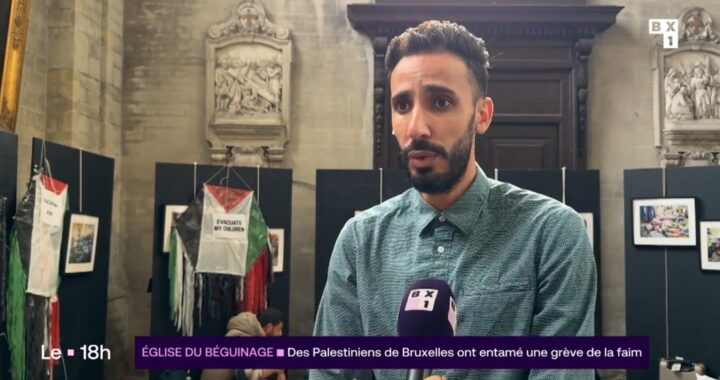
That’s why House of Compassion is temporarily opening its doors in the Beguinage Church — a place that has long stood for the rights of undocumented people. Three families with young children will be housed there, while waiting for placement with host families. This is not a sustainable solution, but it’s better than the street. It offers a bit of safety and breathing space.
Geneviève Frère, coordinator of House of Compassion, says: “When the Beguinage Church opens its doors, it means we are in a crisis. This place is highly symbolic.”
This is not merely a humanitarian gesture, nor a new occupation of the Beguinage. It is a political and civic action in the name of justice. We cannot shelter all families, but we refuse to remain passive any longer.
Father Daniel Alliet declares: “Just as we fought years ago for ‘You don’t lock up a child ! ’ we must now fight for ‘You don’t put a child on the street ! ’ And we’re willing to open our church for that!”
The families we are temporarily sheltering are recognized refugees in Greece. There, they were abandoned by the authorities, in conditions of organized exclusion. 89% of recognized refugees in Greece live below the poverty line. Families are banished to precarious camps, often without running water, electricity, or privacy. Children have no access to education or healthcare. Waiting for the necessary papers to be allowed to work takes endlessly long. This is not a life, but a dead end.
That’s why they came to Belgium, seeking dignified shelter. But here too, Fedasil refuses them accommodation, claiming they already have protection in Greece. That so-called protection exists only on paper. In reality, families are forced to choose between sleeping on the streets of Athens or sleeping on the streets of Brussels. That is not a choice. That is institutional violence.
By refusing to shelter them, Belgium contributes to the same logic of exclusion. These are political choices — in Greece and in Belgium — that make children homeless.