11 Oct 2026
Praying and Marching for the Climate
22 Oct 2026 - 15 Nov 2026
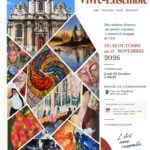
The Art of Living Together
No event found!
News
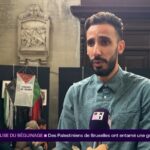
The right to family life
23 september 2026 Since yesterday morning, we have been welcoming five members of the collective of Palestinian families affected by the blockage of family reunification at House of Compassion. Their relatives hold a Belgian visa and an official authorization allowing them to join their families in Belgium. These five individuals have begun an indefinite hunger […]

INDEFINITE HUNGER STRIKE IN SUPPORT OF FAMILY REUNIFICATION
Five family members in Belgium, waiting in despair, are beginning a hunger strike. On Wednesday, September 23, at 4:30 p.m., they—along with many others in the same situation—will hold a press conference at the House of Compassion/Begijnhof Church in Brussels, Begijnhofplein: “After months of grueling uncertainty, mortal fear, sleepless nights, weekly protests, writing an open […]
Praying and Marching for the Climate
Climate March, Everyone’s Joining In! The Climate March 2026 will take place in Brussels on 11 October 2026. All Christians are invited to gather first at 12:45 p.m. for an ecumenical prayer service at House of Compassion, Beguinage Square (1000 Brussels), before joining the main march that will pass through the city centre.

Bienvenue Aboud! – Welcome Aboud! – Welkom Aboud!
Will the 13 Palestinian students and researchers who have received scholarships to study at Belgian universities finally be evacuated from Gaza? They have scholarships. They have places at universities. They have a future waiting for them in Europe. Yet they remain unable to leave Gaza because of the decision of the Belgian Government. Today, young […]
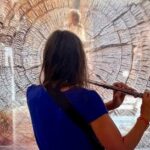
WOOD(S) MUSIC LIVE – Some highlights
WOOD(S) MUSIC LIVE took place as part of the WOOD(S) exhibition, July–August 2026 at House of Compassion. Video: Kristof Degrauwe Featuring artists: Nathandaems, Pascalidis, Katrishania, Angelo Moustapha, Gabriel Druetta, Alice Boscq, Cécile Broche, Salih Türkel, Audrey Lauro, Greet Van Laer, Kemal, Clessidra.
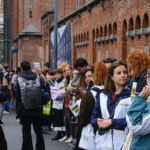
World Refugee Day on 20 June
A policy that reveals its true face: families and children left on the streets. A policy that dehumanises. The right to reception is a fundamental right. There is no reception crisis — there is a crisis of solidarity. This is why we want to form a human chain: to resist the dehumanisation of people seeking […]